Heavy construction companies in Woodbridge, CA handle the grading, utility, and site-infrastructure work that most remodelers and homebuilders aren't set up to do. Search this term and you mostly get directory listings, not real guidance on how to vet a crew for that kind of job. This guide covers what heavy civil construction actually involves, what drives the cost, and the specific questions that separate a qualified contractor from a risky one.
What Is Heavy Civil Construction?
Heavy civil construction covers large-scale infrastructure work: roads, bridges, utilities, grading, and drainage systems. It's built for public agencies or large private developments, not individual homes or offices.
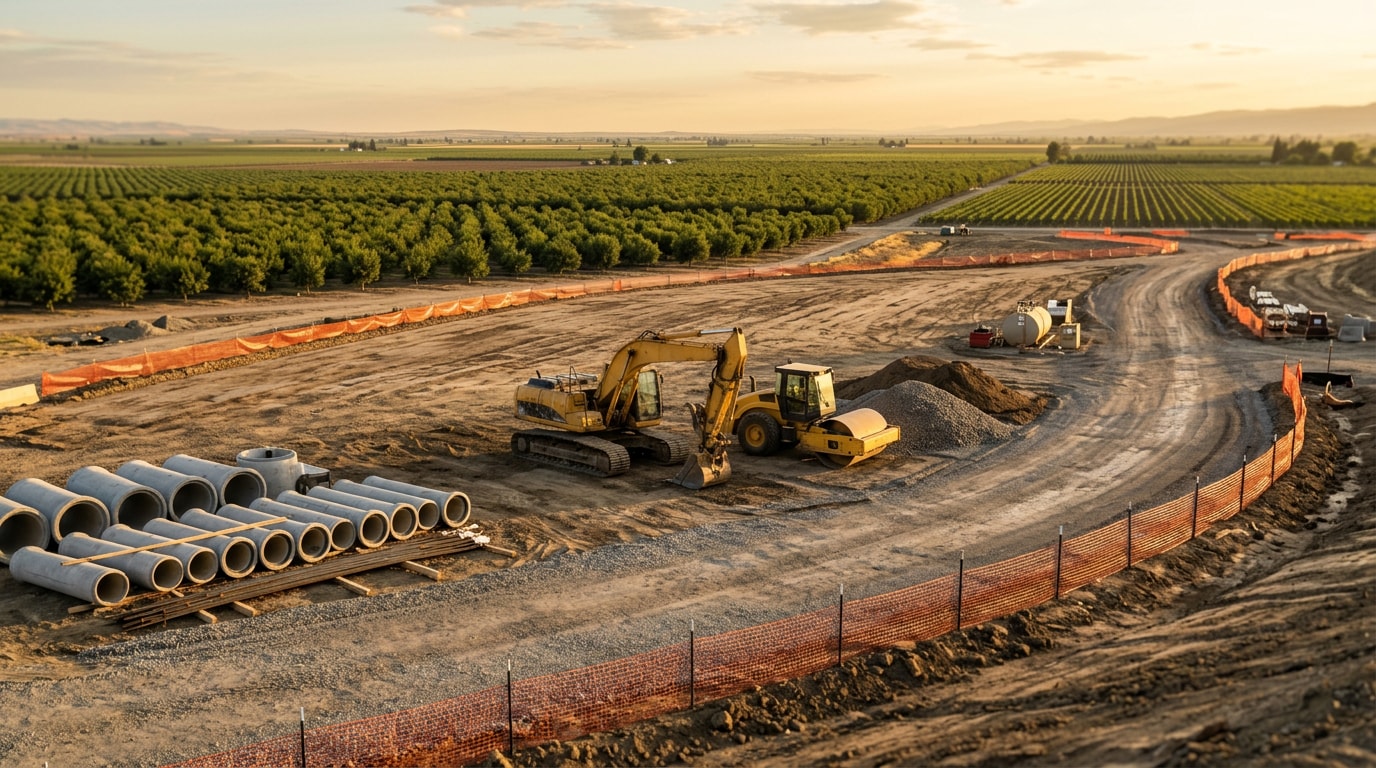
Around Woodbridge and the rest of San Joaquin County, that usually means road and grading work, utility line installation, site prep for new development, and drainage projects tied to the area's agricultural and floodplain geography. A company built for this kind of work is what most people mean when they search for a heavy construction company, as opposed to a home remodeler or general contractor.
The Heavy and Civil Engineering Construction subsector comprises establishments whose primary activity is the construction of entire engineering projects such as highways and dams, and it's broken into four industry groups: utility system construction, land subdivision, highway/street/bridge construction, and other heavy and civil engineering construction. That's a useful filter when you're sorting through quotes: a contractor pitching "heavy construction" services should be able to tell you which of those groups their crew actually works in.
If your project leans more toward site concrete, foundations, or structural work tied to a build rather than public infrastructure, a general contractor handling concrete pouring and foundation pouring may be the better fit than a pure heavy-civil outfit.
Heavy Civil vs. Commercial vs. Residential Construction
These categories get lumped together, but they're different trades with different funding sources, equipment, and permitting paths.
| Heavy Civil | Commercial | Residential | |
|---|---|---|---|
| Typical project | Roads, utilities, grading, drainage | Offices, retail, warehouses | Homes, additions, ADUs |
| Typical client | Public agency or developer | Business owner or developer | Homeowner |
| Permitting path | Public works / agency bid | Local building department | Local building department |
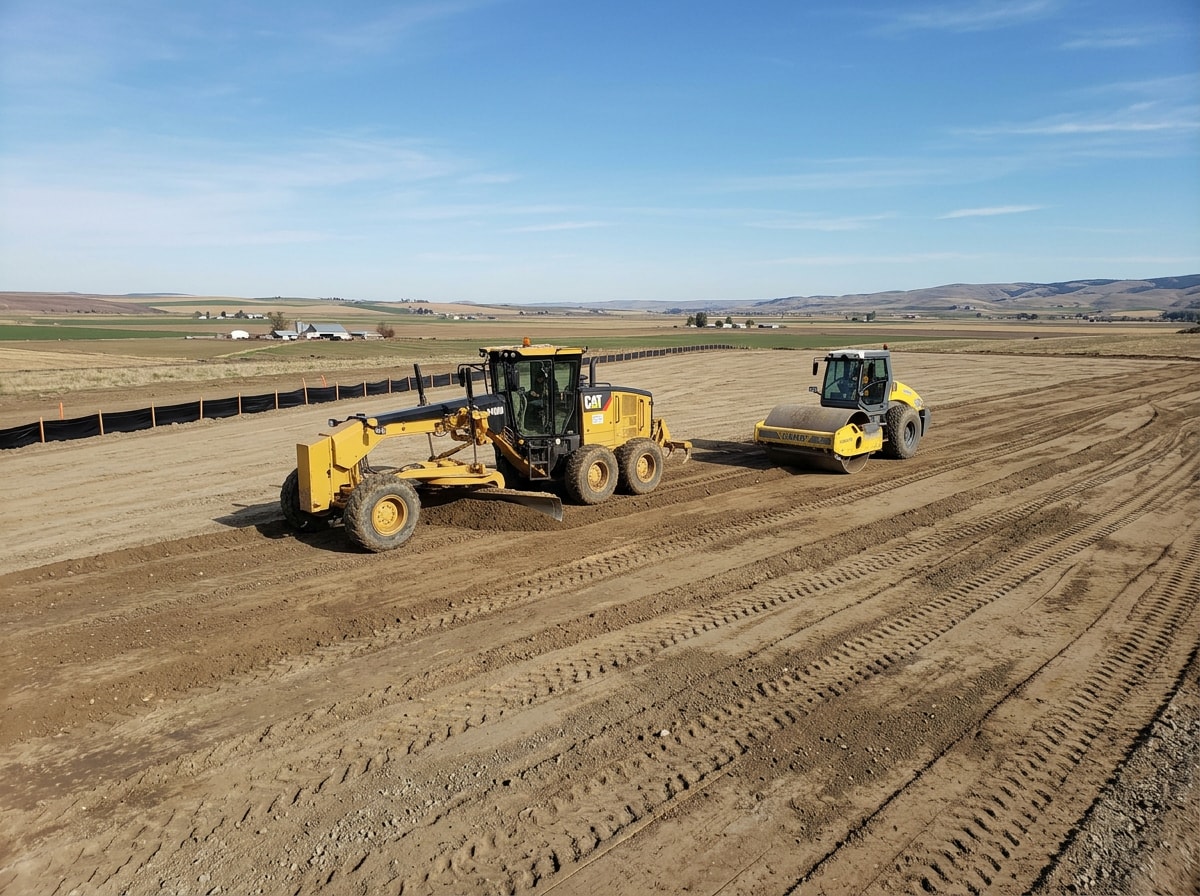
| Primary equipment | Excavators, graders, compactors | Framing crews, cranes | Framing crews, finish trades |
Knowing which bucket your project falls into narrows the field before you request a single quote. A county drainage project and a retail build-out aren't competing for the same contractors, and a bid that lumps them together is a red flag on its own.
What Heavy Civil Projects Typically Cost
Heavy civil pricing swings more than almost any other construction category, and the biggest variable isn't the contractor, it's the ground itself. Expect these factors to move a bid up or down:
- Soil and subsurface conditions. San Joaquin County's mix of clay and silty loam near the Mokelumne River floodplain often needs extra compaction testing and, in some spots, over-excavation before footings or pavement go in.
- Scope and depth. Shallow grading and trenching cost far less than deep excavation, rock removal, or dewatering.
- Permitting and bidding path. Public agency work carries prevailing-wage requirements and bonding costs that private jobs don't.
- Mobilization. Large earthmoving equipment isn't cheap to move; smaller jobs sometimes pay a disproportionate mobilization fee.
- Utility conflicts. Relocating or working around existing water, sewer, or power lines adds time and cost that doesn't show up until the ground is open.
A detailed bid should break out each of these line items separately, not bundle them into one lump sum. If a quote doesn't mention soil conditions or utility locates at all, ask why before you sign.
Start With Relevant Local Experience
Once you know which category your project fits, check whether the company has actually done that kind of work nearby, not just construction work in general.
Ask for two or three references from projects similar in size and scope to yours, and call them. A contractor's project list means little without someone willing to vouch for how the crew performed on-site.
From the field, this is where lowball bids tend to fall apart: a crew unfamiliar with the clay subsoil common around Woodbridge and Lodi will often miss a compaction pass that only gets caught during inspection, turning into a change order weeks into the job. Ask directly whether the company has worked in Woodbridge, Lodi, or Stockton before, and whether they know the local permitting offices and inspection timelines. You can see the areas a contractor regularly works through a service area page rather than taking their word for it.
Verify Licensing, Bonding, and Safety Record
Before any other comparison matters, confirm the company is legally allowed to do the work and has a track record of doing it safely.
In California, contractors performing heavy civil or general engineering work need an active license from the Contractors State License Board, and current law requires a surety bond as a condition of licensure. On January 1, 2023, the contractor license bond, bond of qualifying individual, and disciplinary bond increased to $25,000 as a result of Senate Bill 607. You can check license status, bond status, and disciplinary history directly through the CSLB license lookup tool, which takes a few minutes and is worth running on every company you're considering, not just your top pick.
Safety matters just as much. The most critical set of standards for construction safety falls under 29 CFR 1926, which covers everything from scaffolding and fall protection to electrical systems and trenching. Ask for the company's OSHA recordable incident rate or Experience Modification Rate if they track one. A contractor who's hesitant to share safety numbers, or whose license shows lapses, is telling you something before the job even starts.
Compare Delivery Methods and Management Style
How a company plans to run your project matters as much as whether it's qualified to do it. The three common project delivery methods shift risk and communication responsibility differently between owner and contractor:
| Delivery method | How it works | Best for |
|---|---|---|
| Design-bid-build | Design and construction are separate contracts; lowest responsible bid usually wins | Owners who want competitive pricing and don't mind a longer timeline |
| Design-build | One contractor handles design and construction under a single contract | Smaller or faster-moving projects where one point of contact helps |
| Construction management | A manager oversees design and construction with added owner checkpoints | Larger or public projects needing more oversight along the way |
Ask any candidate how they actually run a job day to day: reporting frequency, who has decision authority on changes, and how change orders get priced and approved. The answer tells you more than a glossy capabilities deck ever will.
Weigh Total Value, Not Just Price
The lowest bid rarely means the best outcome. A complete bid spells out scope, materials, schedule, staffing plan, and what's explicitly excluded, not just a bottom-line number.
An unusually low bid often means missing scope that resurfaces later as a change order. An unusually high one can mean padding, or a contractor unfamiliar with the specific work. When comparing quotes, weigh self-perform capability against heavy subcontracting, crew experience, and equipment availability alongside price. Total value means fewer surprises and work that passes inspection the first time, which the cheapest number on the page doesn't guarantee.
Confirm Communication Expectations Up Front
A multi-week or multi-month project runs smoother when communication is set early. Ask how often you'll get updates, daily, weekly, or at defined milestones, and whether that's by phone, email, or a shared project portal.
Responsiveness matters more than it sounds like it should. A technically qualified firm that's slow to return calls can still turn into a frustrating project.
Quick Checklist: Choosing a Heavy Construction Company in Woodbridge, CA
- Define your project scope, timeline, and budget before requesting bids.
- Prequalify two to three firms based on relevant, local experience.
- Request detailed written bids that break out soil conditions, permits, and utility work separately.
- Score proposals on total value, not price alone.
- Verify CSLB license status, bond, and safety record directly.
- Call references and ask specifically about change orders and delays.
- Confirm communication expectations before you sign.
Working through this list in order keeps you from comparing bids before confirming a company is even qualified to be on the list. For a straightforward way to start, get a free estimate and use what comes back as your first real comparison point. For a broader look at vetting builders in the area, see our guide to custom builders in Woodbridge, CA.
If your project is closer to general construction, remodeling, or an ADU than public infrastructure work, SSG Construction handles concrete, foundations, and general construction throughout San Joaquin County, and can point you toward the right type of contractor if heavy civil work isn't the right fit for your project.
FAQ
What's the difference between heavy civil construction and general construction?
Heavy civil construction covers public infrastructure like roads, utilities, and grading, horizontal work that's often publicly funded. General construction typically refers to private, vertical buildings like homes, offices, or retail spaces, with different funding and permitting paths.
What is a heavy civil contractor?
A heavy civil contractor specializes in large-scale infrastructure projects such as roads, bridges, utilities, and earthwork. These firms typically run heavy equipment fleets and work on projects measured in months or years, often for public agencies.
What licenses do heavy civil contractors need in California?
They need an active license from the Contractors State License Board in a classification that matches the work, such as General Engineering (A). As of January 1, 2023, the required contractor license bond increased to $25,000. You can verify a specific license, its classification, and bond status through the CSLB's public lookup tool before signing anything.
How much does heavy civil site work cost?
It depends heavily on soil conditions, scope, depth, and whether the project is publicly bid. A detailed bid should itemize grading, excavation, utility work, and permitting separately rather than giving one lump number, since that's where cost surprises usually hide.
How do I choose a heavy construction company in Woodbridge, CA?
Prequalify two or three firms on relevant local experience, verify active licensing and bonding, request itemized written bids, and confirm references before signing. Score proposals on total value and schedule reliability, not price alone.
How long does a typical grading or utility project take?
Timelines vary widely based on scope and whether public bidding is involved. Simple site grading can take days to weeks, while utility installation or drainage projects tied to public agency approval often run months once permitting and inspections are factored in.