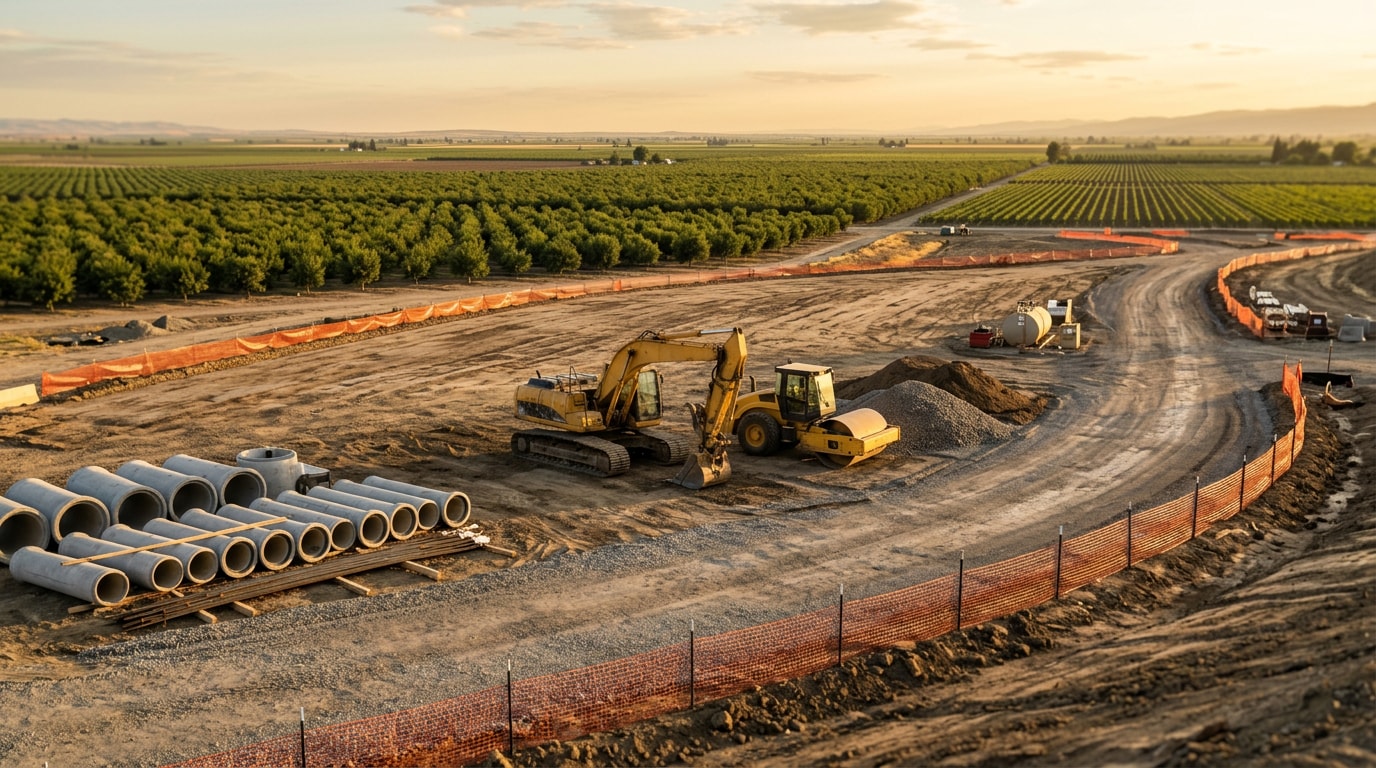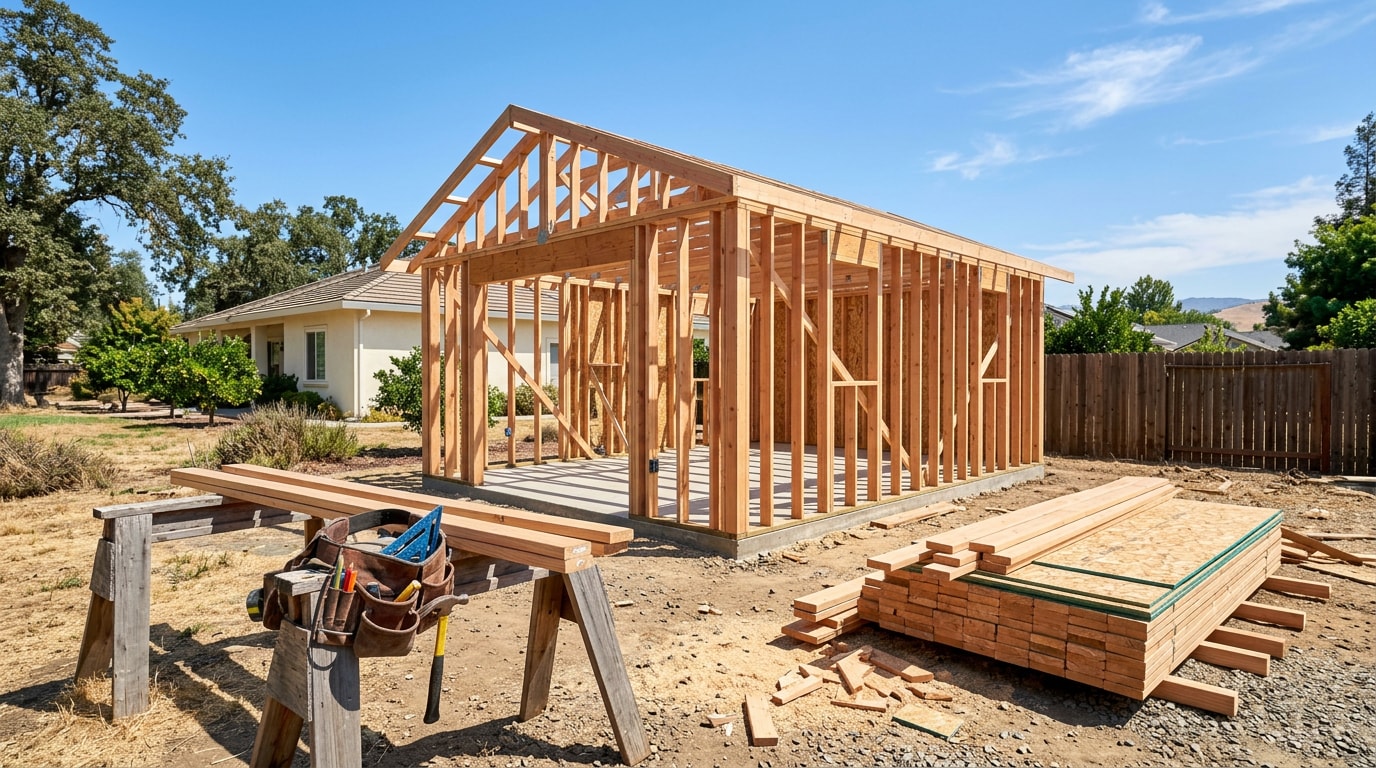
General contractor vs construction company confusion trips up almost every Ripon homeowner planning a remodel, addition, or new build. The two terms get used interchangeably in conversation, but they describe different scopes of work, different licensing rules, and different levels of risk. Get this wrong before you sign a contract and you could end up with no single point of accountability when something goes sideways on the job site.
Visit SSG Construction to see our services and request a free estimate.
Quick Comparison: General Contractor vs Construction Company
Here's the short version before we dig into the details.
| Factor | General Contractor | Construction Company |
|---|---|---|
| Scope of work | Entire project, start to finish | One trade or a defined task |
| Contract type | Prime contract directly with the owner | Subcontract, often under a GC |
| Risk allocation | Carries overall project risk | Carries risk for its own scope only |
| License required | "B" general building classification | Trade-specific "C" classification |
| Best-fit project size | Multi-trade builds (remodels, additions, ADUs) | Single-scope jobs (concrete, tile, cabinets) |
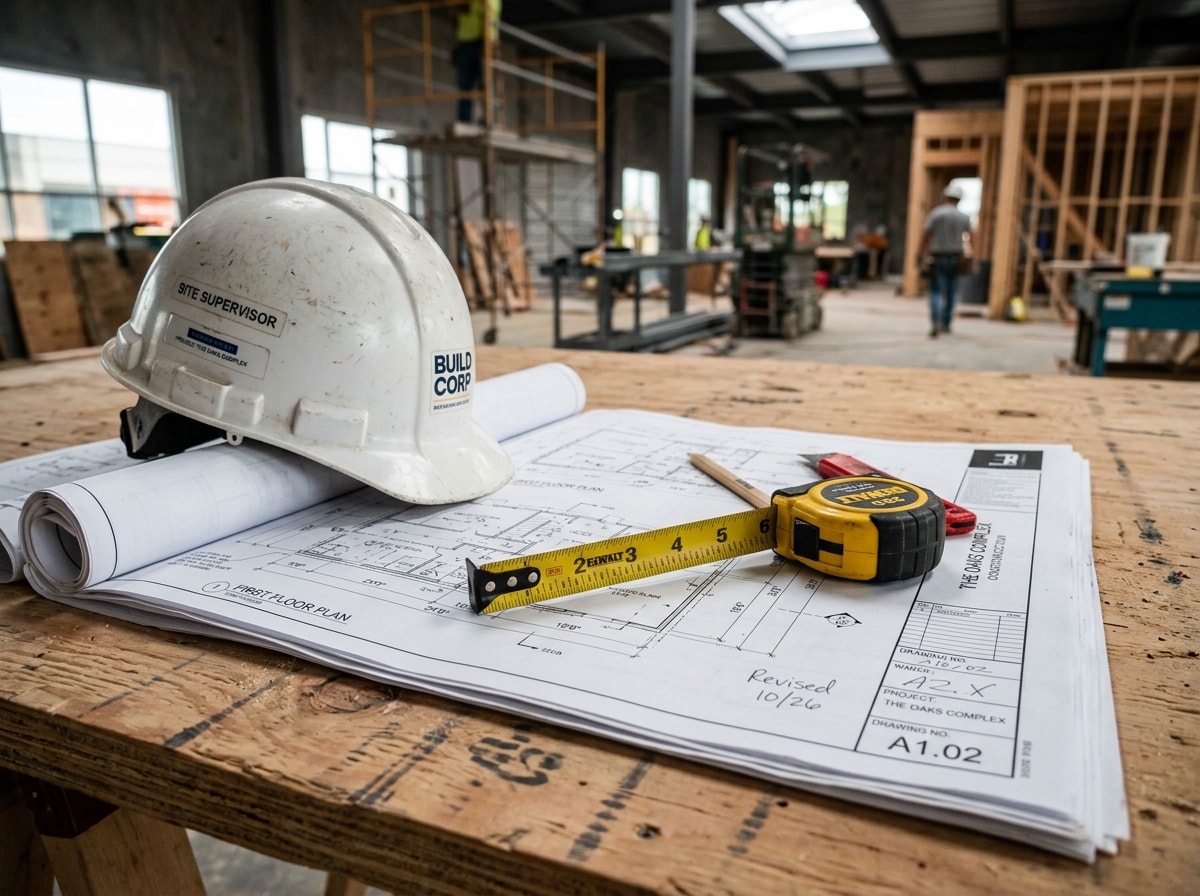
What Is a General Contractor?
A general contractor is the licensed professional who acts as the single point of contact for a construction project, managing scheduling, subcontractors, procurement, and code compliance from initial planning through final walkthrough on the owner's behalf.
The GC's job covers the entire project lifecycle. That means building a detailed schedule, ordering materials, hiring and supervising subcontractors, and keeping the project aligned with local building codes and safety rules. A good GC also handles day-to-day communication so the client isn't chasing down five different trades to find out why the drywall crew hasn't shown up.
In California, this level of oversight is tied directly to licensing, not just business preference. Contractors handling projects that combine two or more unrelated trades generally need a Class B general building license, and the trigger for needing any license at all recently changed. As of January 1, 2025, Assembly Bill 2622 raised the minor-work exemption from $500 to $1,000 in combined labor and materials, which the Contractors State License Board confirmed in an industry bulletin announcing that the license exemption for minor work increases from $500 to $1,000 . Most contractor content online still quotes the old $500 figure, so if you're reading a guide that hasn't been updated, treat that number with caution.
What Does a Construction Company Do?
A construction company is a broader, often trade-focused business that may specialize in one area of a project such as concrete, electrical, plumbing, carpentry, or HVAC rather than overseeing the whole build. Many operate as a subcontractor working under a general contractor's direction.
Because their scope is narrower, construction companies typically have less direct contact with the client. They're brought in to execute a specific piece of work, then move on, while the GC handles overall coordination and keeps every trade on schedule.
It helps to think of "construction company" as an umbrella term, not a licensing category. Every general contractor is part of the construction industry, but not every construction company, or specialty contractor working within the trades, is a licensed general contractor.
Residential vs. Commercial Contracting in Ripon
Contracting work generally splits into two buckets: residential and commercial. Residential covers homes and similar structures; commercial handles larger community, retail, or civic builds. Nationally, residential activity still makes up a large share of total building volume, and current Census Bureau data shows residential construction spending running at a seasonally adjusted annual rate above $900 billion, alongside nonresidential spending in the $730 billion range , so the two categories stay roughly comparable in scale year over year.
Ripon's mix of established subdivisions and larger county-line properties means project scope varies a lot from one address to the next. A kitchen refresh in a 1990s-era subdivision home is a different animal than a ground-up shop building or ADU on a larger parcel, and matching the contractor type to that scope is exactly where homeowners get tripped up.
Which One Should You Hire?
The right choice depends on project size, complexity, and how hands-on you want to be. There's no single correct answer for every situation.
Hire a general contractor if:
- Your project touches two or more trades (framing, electrical, plumbing)
- You want one point of contact for permits, scheduling, and subcontractors
- The scope is a whole-house remodel, addition, or new ADU
Hire a construction company (specialty contractor) if:
- Your project has a single, well-defined scope, like a concrete slab or backsplash install
- You're managing the overall project yourself and just need one trade filled
- A general contractor has already brought them on as part of a larger build
For most whole-home projects in Ripon, that means starting with a general contractor. Our team at SSG Construction manages the general contractor scope directly on projects like whole-house remodeling and ADU construction, then brings in the right specialty trades under one contract so you aren't left coordinating five different companies yourself.
If your project is narrower, like a kitchen remodel or a bathroom tile installation, a specialty crew working under a general contractor's oversight is often the more efficient route, especially when the job also touches plumbing or electrical and needs that Class B coordination anyway.
Not sure which category your project falls into? Get a Free Estimate and we'll walk you through the scope before you sign anything.
How Ripon Homeowners Can Verify a Contractor
Before signing with anyone, whether they call themselves a general contractor or a construction company, take two minutes to check their license status directly with the state. The Contractors State License Board protects California consumers by licensing and regulating the state's construction industry, and today licenses about 285,000 contractors across 45 classifications . That lookup will show the license classification, bond status, and any disciplinary history, which tells you fast whether you're dealing with a licensed Class B general contractor or an unlicensed operator advertising as a "construction company" to skip the paperwork.
National trade groups draw the same scope distinction industry-wide. The Associated General Contractors of America describes itself as an organization of qualified construction contractors and industry related companies dedicated to skill, integrity and responsibility , representing firms that manage full projects rather than single-trade scopes.
We've seen this distinction matter most on ADU and whole-house jobs, where a client hires a "construction company" expecting full-service management and instead ends up coordinating framers, electricians, and plumbers themselves because no one on the job actually holds the Class B license needed to run the whole thing.
If you're comparing bids in nearby cities, our general remodeling contractors guide for Stockton, CA breaks down cost ranges and hiring criteria that apply just as well across the Central Valley.
FAQ
Is a general contractor the same as a construction company?
No. A general contractor manages the whole project under a prime contract with the owner, while a construction company usually handles one trade or task, often as a subcontractor.
Do I need a general contractor for a small remodel in Ripon, CA?
If your remodel involves two or more trades, such as electrical and plumbing together, you need a licensed Class B general contractor. As of January 1, 2025, the state's minor-work exemption threshold is $1,000 in combined labor and materials, up from the previous $500 figure.
How do I know if I should hire a general contractor or a construction company?
Base it on project size, scope, and how involved you want to be. Multi-trade projects need a GC for single-point accountability; single-scope jobs can go straight to a specialty contractor.
Does a general contractor need a license in California?
Yes. Any contractor performing work at or above the state's minor-work threshold needs an active CSLB license in the correct classification. You can verify any contractor's license status directly on the state board's website before signing a contract.
What's the difference between a general contractor and a builder?
In everyday conversation, "builder" and "general contractor" often mean the same thing, especially for new home construction. Formally, "general contractor" is the licensed classification; "builder" is just informal shorthand for the same role.
Does hiring a general contractor cost more than hiring a construction company directly?
Not necessarily. A GC's fee covers coordination and accountability across trades, which often prevents costly scheduling conflicts and rework. Hiring multiple specialty contractors yourself can look cheaper upfront but shifts the coordination risk, and the cost of fixing miscommunication, onto you.
Ready to move forward on a Ripon project? Contact SSG Construction for a free estimate, or start by browsing our Ripon, CA service area coverage to see what we handle locally.