If you're typing general contractor attorney near me Tracy, CA into Google, something has probably already gone sideways: a lien notice, a payment dispute, or a contract you're not sure protects you. We're a licensed general contractor working across Tracy and San Joaquin County, not a law firm, so this guide is written from the seat we actually sit in: watching where disputes start, what usually resolves them, and when a real attorney needs to get involved.
Construction Attorney vs. General Contractor: Who Handles What
A construction attorney reviews contracts, files or defends against liens, and represents clients in mediation or Superior Court. That's legal work, and it requires a license to practice law, not a contractor's license.
A general contractor's job is different: scoping the work, pulling permits, managing subcontractors, and building to code. The best defense against ever needing a construction attorney is hiring a contractor who writes a clear contract in the first place.
If your search for "general contractor attorney" was really about finding a contractor for a remodel, addition, or ADU in Tracy, you can see our Tracy, CA service area and get a free estimate instead of a legal bill. If it's genuinely a legal dispute, keep reading.
Signs You Need an Attorney, Not Just a Better Contractor
Not every disagreement needs a lawyer. Here's a rough gut-check:
- Contract review before signing — helpful to have an attorney look at it, but a well-drafted contract from a licensed, insured contractor should already spell out scope, payment schedule, and change-order terms.
- A payment dispute under a few thousand dollars — often resolvable through a demand letter or a Contractors State License Board (CSLB) complaint before it needs a lawyer.
- A lien has been filed or threatened — this is where you call an attorney. Lien deadlines are unforgiving and a few missed days can void the claim.
- You've received a demand letter or lawsuit — don't wait. The earlier an attorney reviews the situation, the more options you typically have.
Common Disputes We See in Tracy and San Joaquin County
After years of bidding and building projects across Tracy, Stockton, Manteca, and the surrounding area, the disputes that show up most often fall into a few buckets:
Homeowner vs. contractor. Almost always traced back to a vague contract. If "complete" was never defined, or payment draws weren't tied to verified milestones, both sides remember the deal differently once something goes wrong.
Commercial owner vs. general contractor. Larger dollar amounts, more subcontractors, and a delay that stalls lease income instead of just pushing back a move-in date. Liens and payment offsets show up more here than on residential jobs.
GC vs. subcontractor. Scheduling delays, defective-work claims, and change-order disagreements dominate. The general contractor stays responsible to the owner for the finished product even when a sub's work falls short, which is why disputes here can turn into three-way fights fast.
Job site safety incidents. When an injury or near-miss happens, documenting witnesses and physical evidence quickly matters, since job sites change and memories fade. Cal/OSHA's construction safety standards often become central evidence in these cases.
Mechanic's Liens in California: What Property Owners Should Know
A mechanic's lien lets an unpaid contractor or subcontractor file a legal claim against the property itself, which can eventually force a sale to collect what's owed. It's aggressive by design, and it's meant to be a last resort after a demand letter, not the first move.
California's lien deadlines are some of the strictest in construction law and courts generally do not grant extensions for missed dates. The typical timeline looks like this:
| Step | Standard Deadline | Shortened Deadline (Notice of Completion/Cessation filed) |
|---|---|---|
| Preliminary notice | Within 20 days of first furnishing labor or materials | Same |
| Recording the lien | 90 days after project completion | 60 days (direct contractors) / 30 days (subs and suppliers) |
| Filing suit to foreclose | 90 days after recording the lien | Same |
A claimant must generally serve a preliminary notice within about 20 days of first furnishing labor or materials, and after recording a lien must file a foreclosure lawsuit within 90 days or the lien expires automatically, with no extensions for hardship or ongoing settlement talks.
If a Notice of Completion or Notice of Cessation has been filed, that 90-day recording window shortens to 60 days for direct contractors and 30 days for everyone else.
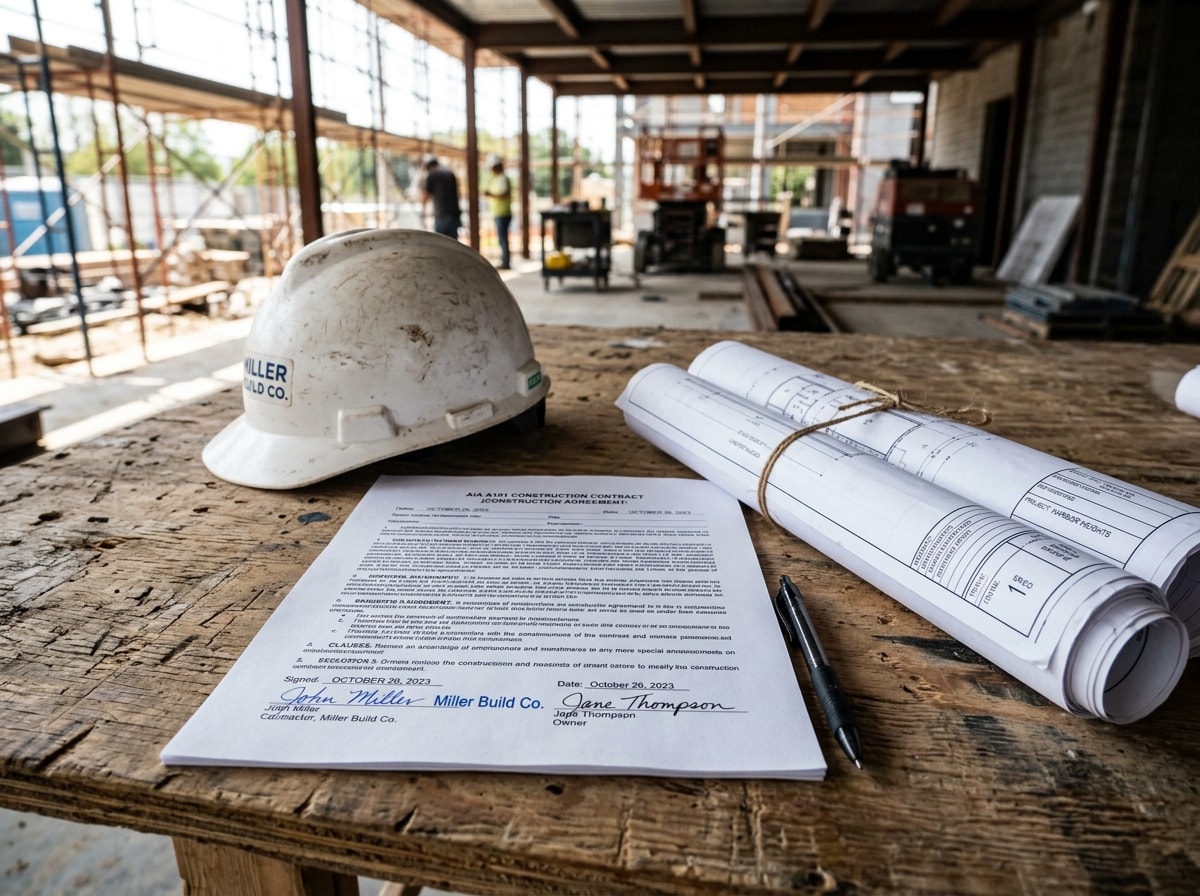
Missing any one of these dates can eliminate the claim entirely, which is exactly why this is the category where "I'll just handle it myself" tends to backfire.
New 2026 California Law Changes Every Owner Should Know
Two new laws took effect for private construction contracts signed on or after January 1, 2026, and they change some of the math for anyone starting a project this year.
Senate Bill 61 (retention cap). For a contract for a private work of improvement, the law limits retention payments withheld by an owner from a direct contractor, by a direct contractor from any subcontractor, and by a subcontractor from any subcontractor, from exceeding 5% of the payment, subject to certain exceptions. This is a real change from the 10% industry norm most owners were used to negotiating.
Here's the part most short blog posts skip: the 5% cap does not apply to residential construction projects, as long as they are not mixed-use and are four stories or less. That means a typical single-family remodel, addition, or ADU in Tracy generally falls outside SB 61's retention cap, though the older 45-day retention release rule under prior law still applies. Don't assume this law protects a residential project the way it protects a commercial one.
Senate Bill 440 (change-order disputes). This companion law sets up a mandatory, time-bound process for resolving change-order and time-extension claims on qualifying private projects, aimed at speeding up disputes that used to drag on for months. You can read the full bill text through California Legislative Information if your contract falls under it.
What Does a Construction Lawyer Cost?
Construction attorneys typically bill hourly, and the rate varies by experience, location, and case complexity. A straightforward contract review costs far less than litigation that drags on for months.
Ask for a written fee estimate at the first consultation instead of assuming a flat number applies. One detail worth knowing: many construction contracts include a fee-shifting clause, meaning the losing side can be ordered to pay the winning side's attorney fees, so the retainer isn't always the full financial picture.
Owner's Refusal to Pay: When It's a Real Dispute vs. a Documentation Problem
One of the most common calls a construction attorney gets starts the same way: the owner refuses to pay, claiming the work was unsatisfactory. Sometimes that holds up. Often it doesn't.
Courts look at whether the alleged deficiency was documented at the time and whether it justifies withholding an entire payment versus a partial offset. Contractors who suspect they're being stonewalled rather than facing a legitimate quality dispute have options short of a lawsuit.
Filing a complaint through the CSLB can apply regulatory pressure that sometimes resolves payment disputes faster than heading straight to court. The CSLB complaint form is available to homeowners, other contractors, subcontractors, or employees, and the board can address violations of California Contractors License Law whether the contractor is licensed or unlicensed, for up to four years from the date of the act.
For smaller amounts, small claims court is also an option. California's small claims process is generally for disputes under $12,500 ($6,250 if you're suing as a business), and while you can ask a lawyer for advice beforehand, you can't have one represent you in the courtroom itself.
How We Prevent Most of This on Every Tracy Project
Most of the disputes above trace back to the same root cause: a contract or process that left too much open to interpretation. On our own jobs, that means a few non-negotiables before work starts:
- A written scope that defines what "complete" looks like for the specific project, whether that's a whole-house remodel or an ADU build.
- Payment draws tied to verified milestones, not calendar dates.
- Change orders documented in writing before the work happens, not after.
- Clear retention and payment terms that match current California law for the project type.
We've found that a homeowner who understands the payment schedule and scope up front almost never ends up needing a lien or a lawsuit. If you're planning a project in Tracy, Manteca, Stockton, or anywhere in San Joaquin County, our general contractor services page walks through how we structure that from day one, and our guide to general contractor home additions in Tracy covers cost and process specifics for one of our most common project types.

What to Expect at a First Legal Consultation
If you do need an attorney, a first consultation typically includes a document review, a realistic timeline discussion, and an upfront fee estimate before any formal engagement begins. Bring your contract, any change orders, payment records, and copies of any demand letters or notices you've received.
If your issue turns out to be more of a contractor problem than a legal one, contact our team for a straight answer and a free estimate on getting the project done right the first time. You can also see our full range of work on the SSG Construction homepage.
FAQ
How do I file a complaint against a contractor in California?
Start with the CSLB, not the courts. Complaints within the board's jurisdiction involve a licensed contractor's failure to fulfill agreement terms, including poor workmanship, project abandonment, failure to pay subcontractors or suppliers, or building code violations. This regulatory route runs separately from a civil lawsuit, so both can move forward at once.
Do I need a lawyer to sue a contractor in California?
Not always. Small claims court is generally for amounts under $12,500 and doesn't allow a lawyer to represent you in the courtroom , making it reasonable for smaller disputes. Larger disputes filed in Superior Court usually benefit from legal representation since the evidence rules and stakes are both higher.
Can I sue an unlicensed contractor in California?
Yes. Hiring an unlicensed contractor doesn't eliminate legal recourse for breach of contract, negligence, or defective work. California law often favors the homeowner here, sometimes allowing recovery of money already paid to an unlicensed contractor regardless of work quality.
What is the penalty for working without a contractor's license in California?
Working without a required license can trigger fines, misdemeanor charges for repeat violations, and loss of legal standing to collect payment for the work performed. An unlicensed contractor generally cannot sue a client for nonpayment, even if the work itself was done competently.
Is a "general contractor attorney" the same thing as a general contractor?
No. A general contractor builds and manages the project; a construction attorney handles the legal side, like contracts, liens, and disputes. If you searched this term looking for someone to build or remodel your home rather than litigate a dispute, you want a licensed contractor, not a law firm.