Industrial construction contractors in Tracy, CA are no longer building occasional warehouse shells, they're competing for a steady pipeline of distribution centers and manufacturing facilities along the I-205 corridor. That growth means more bidders, more sales pitches, and more risk of hiring a contractor whose "industrial" experience is really just big commercial work with a different sign. This guide breaks down what to check before you sign anything.
Why Tracy's I-205 Corridor Needs Serious Industrial Contractors
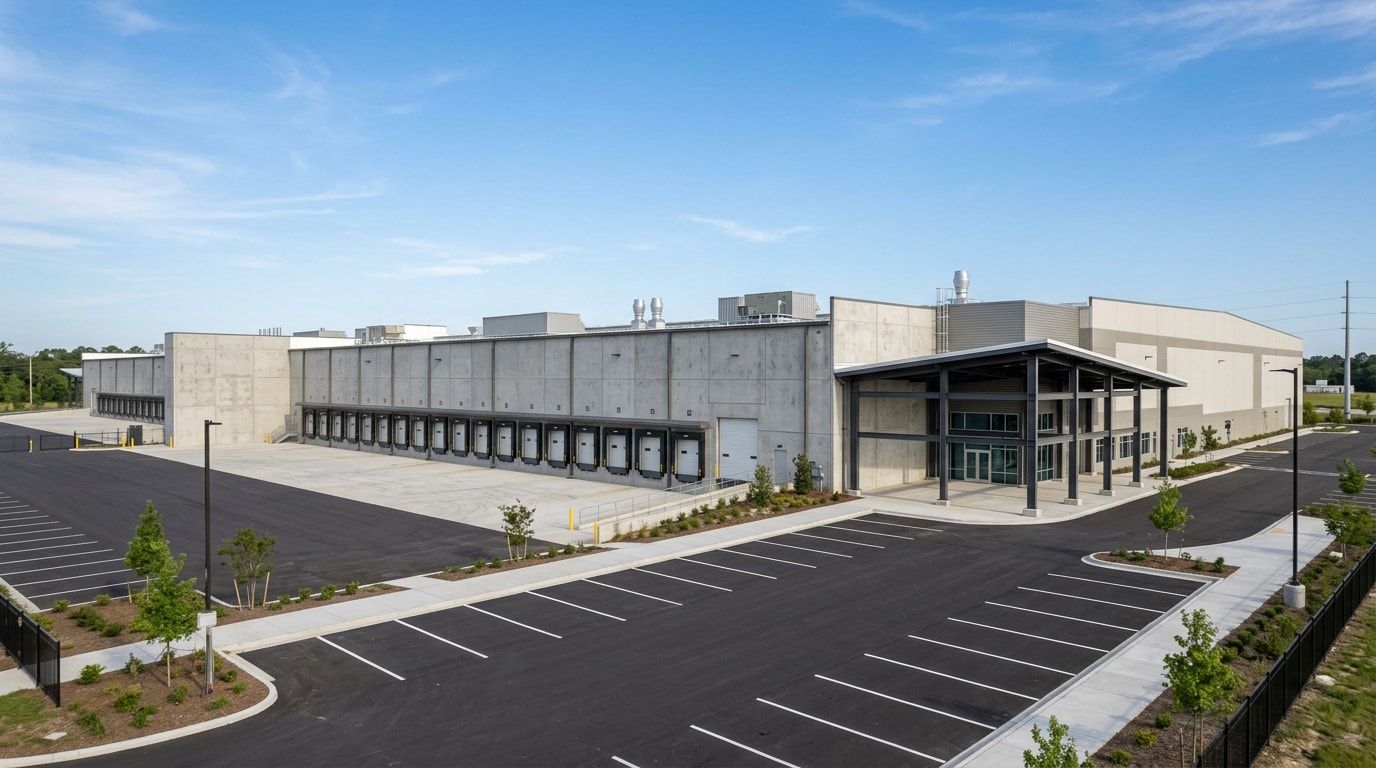
Tracy's industrial pipeline isn't hypothetical. The Paradise Pointe Business Park proposal alone covers two warehouse buildings totaling 718,165 square feet, split between a 466,977-square-foot building and a 251,188-square-foot building on the city's northeast side. A short distance away, the Tracy Northeast Business Park project has come back through planning review proposing up to 2.8 million square feet of warehouse, distribution, and manufacturing space on 169 acres along Paradise Road.
That's on top of facilities already delivered, like the 606,343-square-foot cross-dock distribution facility in the Northeast Industrial specific plan area , built with direct freeway access to I-5, I-205, I-580, and Highway 99. You can see how this plays out locally on the Tracy, CA service area page, where this kind of project scale is the baseline, not the exception.
For companies researching industrial construction contractors in Tracy, CA, the takeaway is simple: this market regularly produces million-square-foot projects, and a contractor's local track record should be judged against that scale, not against a typical retail build-out.
What Industrial Construction Contractors in Tracy, CA Actually Build
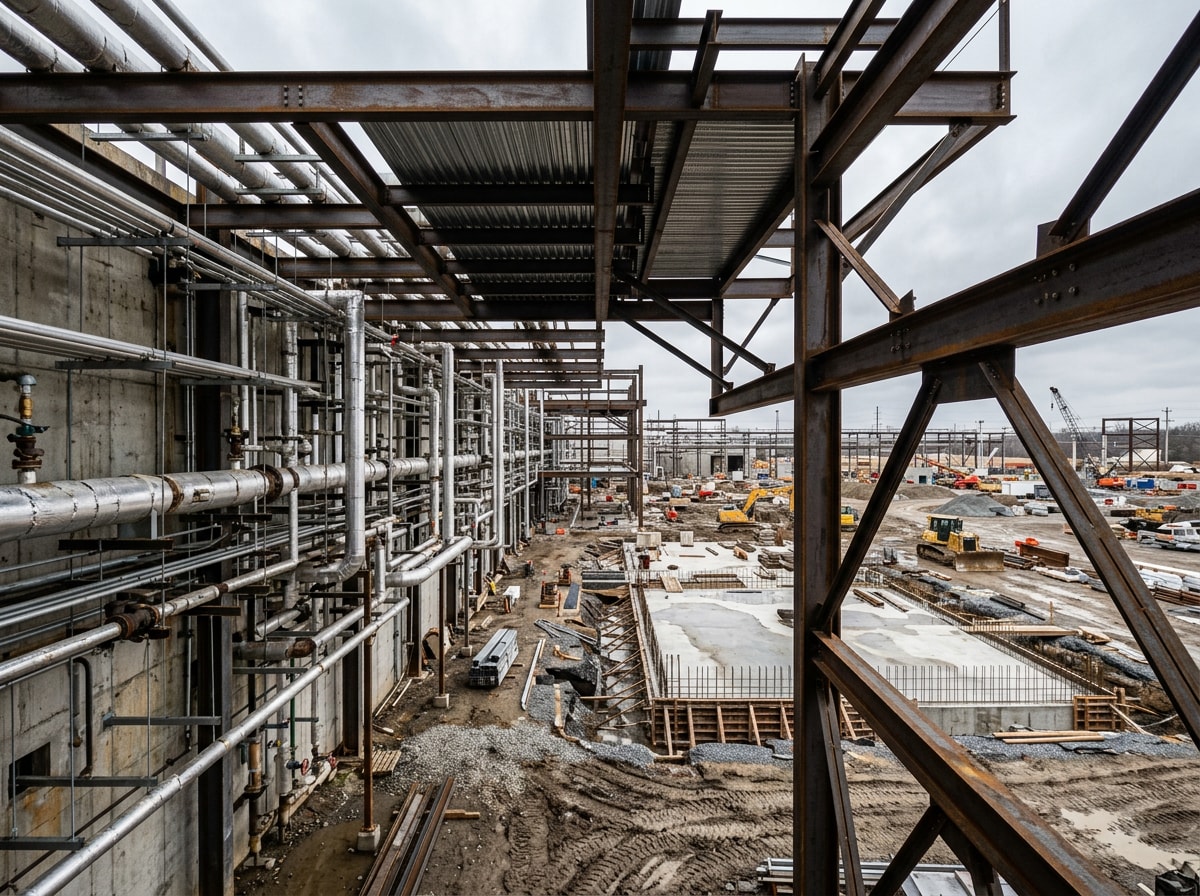
Industrial construction covers process plants, warehouses, distribution centers, manufacturing facilities, and utility infrastructure. This work demands mechanical, structural, and civil coordination that goes well beyond standard commercial building.
A true industrial scope blends three disciplines that have to move together, not in sequence:
- Mechanical construction – piping, process equipment, and utility tie-ins
- Structural steel – framing for process buildings, racking, and equipment support
- Civil construction – grading, foundations, and the site utilities everything else sits on
A Tracy contractor who self-performs across these disciplines can sequence them tightly instead of juggling separate subcontractors on separate schedules. That coordination is what separates a true industrial scope from a standard tilt-up build, and it's the core of what you'll find detailed on the general contractor services page.
How to Evaluate Industrial Construction Contractors in Tracy, CA
Define the Project Scope Before You Request Quotes
Before any bid goes out, document the operating constraints that will actually shape the project, not just the square footage. Vague scopes produce bids that can't be fairly compared.
Before writing an industrial RFQ, spell out:
- Production restrictions during construction
- Existing utility capacity
- Phasing requirements
- Non-negotiable project constraints (noise limits, access hours, live-process zones)
Contractors bidding against the same assumptions return numbers you can actually weigh against each other, rather than guesses built on different interpretations of an incomplete scope.
Compare Experience at the Level of Project Risk
Years in business and total square footage built are weak signals on their own. What matters is whether a contractor's experience matches the specific project risk in front of you.
A contractor who has only built empty tilt-up warehouse shells faces a very different risk profile than one who has worked inside an occupied, live-process facility with active utilities and safety protocols already running. The second scenario demands tighter coordination, more disciplined scheduling, and a deeper industrial track record. Ask for references tied to comparable risk, not just comparable size.
Interview the People Who Will Deliver the Work
Meet the actual field project manager and key trade partners proposed for your job, not just the sales team that wins the account. Ask how that specific team has handled schedule pressure or incomplete design information on past work. A contractor interview focused on the people doing the building reveals far more than a slide deck ever will.
Self-Performed Work vs. Subcontracted Scope
Self-perform contractors keep core crews and equipment in-house rather than brokering most of the scope to subcontractors. That distinction affects schedule reliability directly, especially given the ongoing construction labor gap: the industry needs to attract an estimated 349,000 net new workers in 2026 to meet demand for construction services , according to Associated Builders and Contractors.
| Factor | Self-Perform Contractor | Fully Subcontracted Contractor |
|---|---|---|
| Crew availability during labor shortages | Shifts internal crews between trades | Depends on sub availability and sub's own backlog |
| Schedule control | Direct oversight of mechanical, structural, civil | Coordination layer adds scheduling risk |
| Cost transparency | Fewer markup layers | Each sub adds its own margin |
| Accountability for rework | Single point of responsibility | Disputes over which trade caused the issue |
A contractor who depends heavily on subcontracting has less control over crew availability when labor markets tighten. One with self-perform capacity in mechanical, structural, and civil trades can shift resources internally when conditions change, which tends to protect committed completion dates. This is also where the line blurs between a general contractor and a construction manager who only coordinates subs, a distinction covered in more depth in General Contractor vs. Construction Company in Ripon, CA: What's the Difference?.
Safety, Certifications, and Licensing to Verify
Ask for a contractor's Experience Modification Rate (EMR) and safety record before shortlisting. An EMR at or below the industry average signals a better-than-typical claims history; a number well above it is worth questioning directly.
For structural steel scopes, check whether the fabricator or erector holds a current AISC Certification, a quality-management audit that confirms a company has the personnel, procedures, and equipment to fabricate or erect steel to code. Low EMR numbers and current certifications are a starting point, not the full picture.
Treat safety as an ongoing management system rather than a one-time checklist. Ask how a contractor runs daily safety briefings, OSHA compliance audits, and incident reporting across an active jobsite.
California licensing through the Contractors State License Board is non-negotiable before work starts. You can look up any license number, business name, or bond status directly through CSLB's public database in a few minutes.
Who Industrial Contractors in Tracy, CA Typically Serve
Local proof matters as much as general qualification. A Tracy-based industrial contractor should already understand the client types that make up this market:
- Warehouse and distribution center owners
- Light industrial and manufacturing facility operators
- Multi-site portfolio owners
- Property managers overseeing industrial leaseholds across San Joaquin County
A contractor comfortable with one occupied warehouse expansion is usually equipped to handle a portfolio of similar sites. Review the general construction services page for how that scope breaks down on an active project, and the concrete work page for foundation and slab specifics that underpin most industrial builds.
Why Local, Licensed Experience Pays Off
A contractor familiar with San Joaquin County permitting already knows inspector expectations and regional code quirks that catch out-of-area crews off guard. That familiarity shortens plan-check cycles and avoids costly rework tied to assumptions that don't match local requirements.
If you're comparing bids right now, the fastest way to separate a qualified industrial contractor from a commercial generalist is to ask the questions above directly, scope, risk-matched experience, self-perform capacity, safety record, and licensing, before you ever discuss price. Visit the company homepage to see how this approach plays out across past industrial and commercial projects, or get a free estimate to start a scope conversation on your project.
FAQ
Do I need permits for industrial or commercial construction in Tracy?
Most industrial and commercial projects in Tracy require permits, including tenant improvements, structural changes, and electrical or HVAC work. San Joaquin County and the City of Tracy both review plans before construction begins, so confirm permit status before any work starts on site.
What's the difference between commercial and industrial construction?
Commercial construction generally covers retail, office, and mixed-use buildings built for occupancy and foot traffic. Industrial construction covers warehouses, distribution centers, process plants, and manufacturing facilities, which require heavier mechanical, structural, and civil coordination for equipment loads, utility capacity, and process flow.
What types of projects require a licensed general contractor in California?
California law requires a licensed general contractor for any project where combined labor and materials exceed $500. Most multi-trade industrial and commercial projects fall well above that threshold, making licensing a basic qualifying requirement, not an optional credential.
What should I look for in a commercial or industrial construction contractor?
Evaluate contractor experience matched to project risk, self-perform capability, safety record and EMR, and clear cost management practices. These factors give a reasonably complete picture of how a contractor will actually perform once work begins.
How can I verify a contractor's reputation?
Check their CSLB license status directly, call references from projects of comparable risk and scale, and look for trade certifications like AISC for structural steel scopes. A contractor willing to provide references tied to comparable project risk is usually confident in their track record.
Why is licensing important for contractors in California?
Licensing protects consumers, confirms a baseline of code compliance knowledge, and establishes clear liability if something goes wrong. An unlicensed contractor on an industrial project creates legal and financial exposure that falls back on the property owner.